
Industries/Cannabis
The hardest vertical in digital. Exactly why it pays to serve well.
White label cannabis marketing lets your agency serve dispensaries, brands, and MSOs without building compliance expertise in-house. Conduit runs SEO, local search, and compliant programmatic under your brand, scoped state by state and platform by platform, so your client stays visible and your agency stays out of trouble.
Twenty-minute conversation. We’ll tell you if it’s a fit.
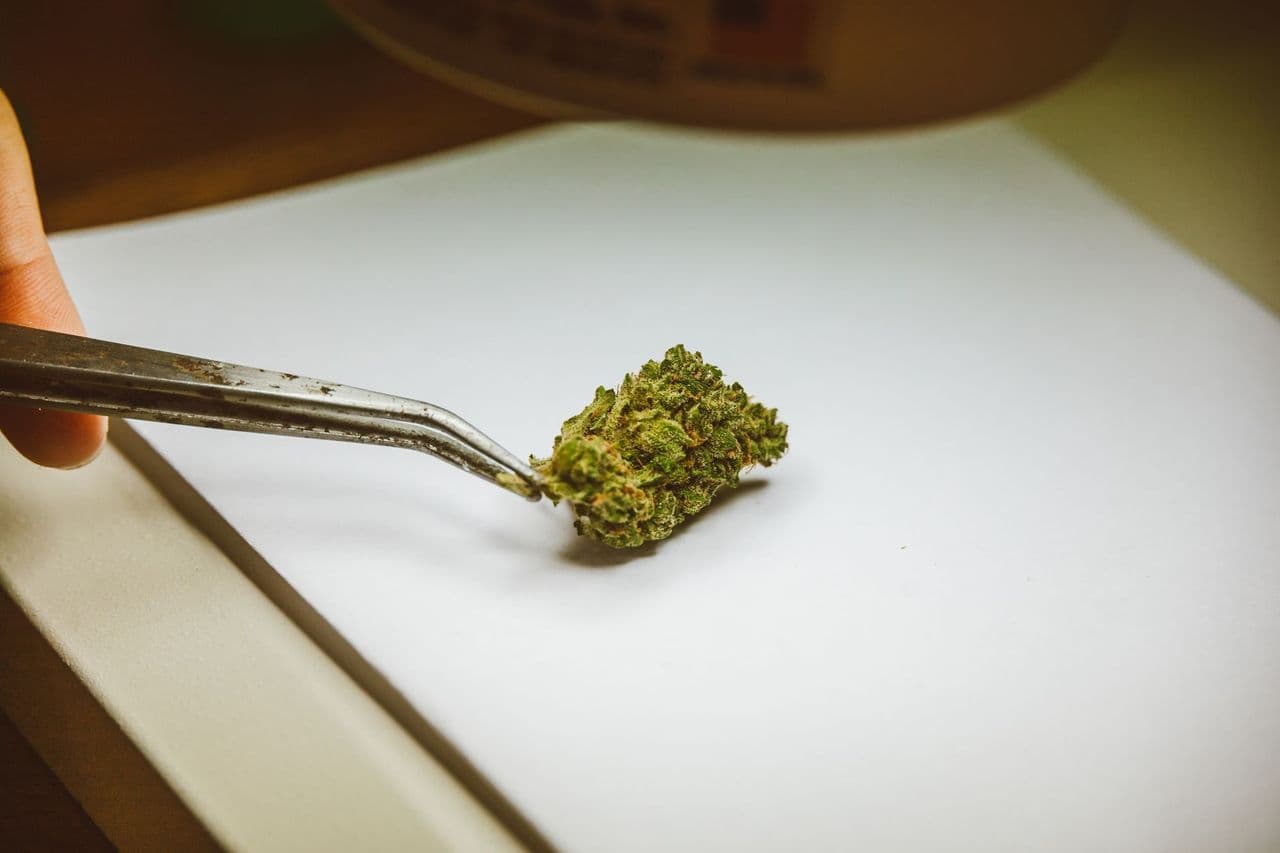
Cannabis is one of the hardest verticals in digital marketing, and one of the most profitable to serve well. The major ad platforms restrict or outright ban cannabis advertising, the legal patchwork changes state by state, and a single non-compliant campaign can get a client's ad account suspended overnight. That difficulty is exactly why agencies that can deliver real cannabis results keep the account for years instead of losing it to the next agency that promises the same thing without knowing where the lines actually sit.
Your agency does not need to become the in-house expert on cannabis advertising law to win these clients. It needs a fulfillment partner who already is one. Conduit runs cannabis campaigns for agencies as a white label partner: your agency owns the dispensary, brand, or MSO relationship, sets the retail price, and presents every deliverable as its own. Conduit runs the channels that actually move product off shelves and patients through doors, inside the rules of each platform and each state, and never contacts your client directly.
01
Why cannabis is a white label decision, not a hire
Building cannabis capability in-house means learning the compliance edges of every channel, tracking state-by-state rule changes as they happen, and absorbing the risk when a platform tightens its policy without warning. For most agencies that is a poor use of a headcount slot when the demand is real but lumpy: one dispensary client this quarter, a CBD brand next quarter, an MSO the quarter after that, each with a different risk profile. A white label partner already carries that knowledge and that risk across dozens of cannabis and cannabis-adjacent engagements, which is a different thing entirely from carrying it across one.
The legal landscape alone makes this a specialist's job. As of 2026, 24 states and Washington D.C. allow adult-use cannabis, according to NORML's state-by-state legal tracker, while 16 additional states run comprehensive medical marijuana programs without full adult-use legalization. That leaves only a handful of states, Idaho, Wyoming, Kansas, and a few others, with no legal cannabis program of any kind. A channel mix that works in a fully legal adult-use state can be entirely wrong for a client operating under a medical-only program two states over, and an agency running both without a partner who tracks this by state is guessing.
02
What the ad platforms actually allow, and don't
Google tightened its rules again in January 2026. Per Google's own Update to Cannabis-Related Content Policy, the platform still largely prohibits promoting THC-containing cannabis products to U.S. consumers, with narrow exceptions carved out for hemp-derived CBD. Topical CBD ads are allowed only where THC content is 0.3% or lower, and only with rigorous compliance documentation: proof of a secure supply chain and a third-party Certificate of Analysis on file before the campaign runs. Google's separate Recreational drugs policy covers the plant-touching side directly, and pharmaceutical CBD advertisers face their own approval process limited to California, Colorado, and Puerto Rico.
Google is also piloting a narrow Search-only cannabis program in Canada, running from August 2025 through the end of 2026, explicitly framed as a test to inform future U.S. policy rather than a signal that broader access is coming soon. None of this is enforced loosely. Google uses machine-learning classifiers paired with human reviewers, and trigger words like THC, flower, or pre-roll, or even ordinary calls to action like "order online," can trip a disapproval on a dispensary's account within minutes. An agency running paid search for a cannabis client without knowing this in detail is one campaign away from an account-level suspension it did not see coming.
Meta is more restrictive still. Per Meta's own Drugs and Pharmaceuticals policy, ads promoting THC or any psychoactive cannabis product are banned outright, full stop, across Facebook, Instagram, and every other Meta surface. The one narrow exception is CBD topicals that hold active LegitScript certification, and even those require prior written permission from Meta, targeting locked to the United States, and an 18+ audience floor. Brands that try to route around this with coded language or suggestive imagery risk a permanent account ban, not a warning.
- SEO and local search are the workhorses: they are not gated by ad-platform cannabis bans, so organic visibility and a well-maintained Google Business Profile carry disproportionate weight for a dispensary competing on foot traffic.
- Programmatic display and OTT/CTV reach cannabis-legal audiences through cannabis-friendly exchanges and inventory the walled gardens will not touch, which is where real reach lives once Google and Meta are off the table for plant-touching brands.
- Narrow, compliant paid social and search exist for CBD and ancillary brands under LegitScript certification and Google's stricter documentation requirements, and only a partner who tracks both policies in real time should be running them.
03
The legal patchwork means the plan has to be rebuilt state by state
It is worth dwelling on what that patchwork actually means for a multi-location or multi-state cannabis brand your agency might take on. NORML's state-by-state legal guide documents not just whether a state allows adult-use or medical cannabis, but the specific penalties, possession limits, and business licensing frameworks attached to each one, and those details change the marketing plan directly: a state with strict advertising-placement rules near schools or a strict cap on how dispensary signage can describe products changes what local SEO content and Google Business Profile descriptions can safely say. An agency running the exact same content template across a client's locations in three different states is not being efficient, it is quietly building compliance risk into the parts of the campaign that feel the most boilerplate and therefore get the least scrutiny.
04
The market is real money, which is why the risk is worth managing
None of this compliance overhead would matter if the category were small. It is not. Per MJBizDaily's US cannabis sales estimates, regulated U.S. cannabis sales are forecast to reach $30.5 billion in 2026, a projected 4.9% rebound after 2025's roughly $33.8 billion in retail sales. On a broader definition that folds in hemp and CBD product sales, the category approaches nearly $47 billion this year, and MJBizDaily's longer-range analysis puts the regulated market on track for $60 billion by 2030 at a 12.2% compound annual growth rate. That is a category worth building real fluency in, not one worth avoiding because the ad platforms make it inconvenient.
05
Why cannabis marketing budgets look nothing like retail's
The compliance overhead in cannabis is not the only reason the channel mix looks different, the money behind it looks different too. Per Digiday's reporting on cannabis ad budgets, cannabis brands typically spend only about 5 to 8% of their operating budget on marketing, well below what a comparable CPG or retail brand allocates as a share of revenue, and only 16% of that thin marketing budget goes to retail media, versus 39% for CPG brands generally. That is a category still catching up to what its ad spend should look like given its actual sales volume, which is exactly why disciplined channel selection matters more here than in categories where a brand can simply outspend a mediocre strategy. A cannabis client cannot afford to burn a smaller budget on channels that get suspended or wasted on the wrong platform; every dollar has to land on SEO, local, and programmatic inventory that is actually allowed to run.
That budget discipline is also why the highest-leverage, lowest-cost channels, organic local SEO and a well-run Google Business Profile, do double duty in cannabis in a way they do not in categories with looser ad-platform access. When a client cannot simply buy its way into visibility on Google or Meta, the free and earned channels stop being a nice-to-have add-on and become the primary lever, which is precisely the reasoning behind leading every cannabis engagement with SEO and local search rather than treating them as secondary to paid media the way a generic media plan might.
Takeaway
A cannabis client cannot afford to burn a smaller budget on channels that get suspended or wasted on the wrong platform; every dollar has to land on SEO, local, and programmatic inventory that is actually allowed to run.
06
How Conduit runs cannabis on GPS
Every engagement starts the same way regardless of vertical: GTM, GA4, and Conversion Clarity configured and verified before anything launches, so a dispensary's foot traffic, menu clicks, and inbound calls attribute back to the specific channel that produced them. That foundation matters more in cannabis than almost anywhere else, because half the usual attribution toolkit, pixel-based ad platform reporting, is simply unavailable for plant-touching clients. GPS is what replaces it: a clean read on what is actually working, built from first-party data your agency and your client both control.
From there the channel mix leans on what cannabis actually allows rather than what a generic media plan defaults to: technical and local SEO, Google Business Profile optimization tuned for suspension risk, content built to rank for high-intent local queries, and programmatic or OTT flights where paid social and search cannot go. Because the rules differ meaningfully for plant-touching businesses versus CBD versus purely ancillary services (packaging, consulting, equipment), each client gets scoped to the strictest standard that applies to their specific category, and that scoping decision gets written down.
07
Compliance-aware reporting when half the usual data is off the table
A dispensary client evaluating an agency's cannabis experience asks one question early: how do you prove this is working when the usual ad-platform reporting is gone. The answer has to be concrete, not reassuring language. Conduit's reporting for cannabis clients runs on GA4 events tied to menu clicks and location-page visits, Conversion Clarity numbers placed on every location page so a call sourced from a Google Business Profile listing attributes to the channel that produced it, and monthly documentation of exactly which channels ran, which did not, and why. That last piece is what lets your agency answer a nervous, compliance-conscious client with specifics instead of a shrug the next time a platform tightens its policy.
Serve cannabis clients without building the team
Twenty minutes with the pod that runs it. Bring one client and we will tell you if it is a fit.
08
The proof
Cannabis is a vertical where Conduit already ranks, not just advises. The guides Conduit has published on cannabis content marketing and cannabis internet marketing hold page-one positions for competitive terms in the category. That is not a claim about a client's results; it is direct evidence that the team understands how this market is searched and how to earn organic visibility in it, using the same SEO discipline your agency's dispensary clients need. It is also the kind of proof point worth putting next to Conduit's broader white label vs in-house case: a specialist pod that has already solved the hard version of a problem is a different proposition than a generalist agreeing to figure it out on the clock.
09
Common mistakes agencies make in cannabis
The most frequent mistake is treating cannabis like any other local vertical and pointing standard paid search and social budgets at it, only to watch the account get suspended within days because a trigger word or a coded call-to-action tripped an automated review. The second mistake is under-investing in Google Business Profile, arguably the single highest-leverage asset a dispensary has, because it looks like a small task sitting next to a media plan that feels more impressive on a proposal. The third is silence: failing to document why a channel was excluded from the plan, which leaves the agency with no answer when a client reasonably asks where the rest of the budget went.
Avoiding all three comes down to the same discipline that runs through every Conduit engagement, in cannabis and elsewhere: scope the channel mix to what the category and the state actually allow, put the GPS tracking foundation in place before anything launches, and write down the reasoning so it survives a client's scrutiny six months later.
10
What the first 90 days look like
The first month is discovery and setup: mapping which channels the client's specific category actually allows under both platform policy and state law, auditing the existing Google Business Profile for suspension or compliance risk, and getting GTM, GA4, and Conversion Clarity configured before a single piece of content goes live. The second month is when technical and local SEO work starts compounding, alongside the first programmatic or OTT flights if the budget supports them. By the third month the reporting should show early ranking movement on the highest-intent local terms and a clean read on which channels are actually producing calls and direction requests, giving your agency something concrete to bring into the client's next check-in instead of a status update built on hope.
What to ask a cannabis fulfillment partner before signing
Not every agency evaluating a cannabis fulfillment partner knows what to press on, since the vertical is unfamiliar enough that even the right questions are not obvious. A short, concrete checklist covers most of what matters before a client relationship is on the line.
- Can the partner name, specifically, which channels are compliant for this exact client's category, plant-touching, CBD, or ancillary, and which state, rather than giving a generic cannabis answer?
- Does the partner track platform policy changes, like Google's January 2026 cannabis-content update, as they happen, or only after a client's account gets flagged?
- What does attribution look like without paid-social pixel data, and is there a concrete GTM, GA4, and Conversion Clarity setup already proven on other cannabis clients?
- Does the partner have its own visible proof of cannabis SEO performance, not just a claim of experience, that your agency can check before committing a client relationship to it?
11
The pod model behind the cannabis playbook
None of the above works as a one-off arrangement between your agency and a single freelance specialist who happens to know cannabis. It works because Conduit has been agency-exclusive since 2017 and runs cannabis fulfillment through a dedicated, US-based specialist pod shared across its hundreds of partner agencies, the same structural model behind every vertical Conduit serves. That matters specifically in cannabis because the compliance edges shift often enough that a single specialist's knowledge goes stale fast; a pod that is actively running campaigns across many cannabis and cannabis-adjacent clients catches a platform policy change, like Google's January 2026 update, the week it happens, not the month after a client's account gets suspended. Conduit's published playbooks and pricing lay out exactly how that pod structure and the wholesale-plus-markup model work for an agency evaluating whether to bring a vertical like this in-house or keep it partnered.
12
Why this discipline matters beyond cannabis
The discipline cannabis demands, scoping every channel to what is actually allowed, documenting the reasoning, and building tracking before spend moves, is the same discipline Conduit applies to every regulated or restricted vertical it serves for its hundreds of partner agencies. An agency that trusts a partner to get cannabis right is usually, correctly, trusting the same partner with CBD, financial services, or any other client where the easy answer is not always the compliant one.
Choosing a fulfillment partner for cannabis work is really choosing how much risk your agency is willing to absorb without visibility into it. A generalist vendor asked to run cannabis campaigns will either quietly reach for tactics that violate platform policy, private link networks, misclassified paid campaigns that get accounts flagged, or it will simply underperform because it does not know where the real inventory and the real opportunity sit in this category. A partner who has already mapped the compliant channels, already knows which programmatic exchanges accept cannabis-adjacent inventory, and already has reporting built to prove attribution without paid social data removes that risk before it becomes your agency's problem to explain to a client.
None of this is theoretical for Conduit. The team runs cannabis SEO and content today, which is exactly why the guides published on cannabis marketing already hold page-one positions for competitive terms in the category, proof the underlying playbook works before your agency ever hands over a client relationship built on it. If your agency is weighing whether this is worth bringing in-house at all, the same build-versus-buy math that applies to every other channel applies here, with one difference: the compliance learning curve in cannabis is steeper, and the cost of getting it wrong is an account suspension, not just a slow month.
Where to start
The channels cannabis clients buy most
Cannabis, answered
Questions agencies ask about this vertical
Can you run Google and Meta ads for a cannabis client?
For plant-touching cannabis businesses, no. Both platforms prohibit it outright, and running around the rule gets accounts banned, not warned. For CBD and ancillary brands there are narrow compliant paths under LegitScript certification and Google's stricter CBD documentation requirements. We scope every client to the strictest applicable rule and put the reasoning in writing.
How do you drive results if the big ad platforms are off-limits?
SEO, local search, and Google Business Profile do the heavy lifting because they are not gated by cannabis ad bans. Programmatic display and OTT reach cannabis-legal audiences through cannabis-friendly inventory the walled gardens will not accept. The mix is built around what each client's specific category and state actually allow.
Who owns the client relationship?
Your agency. Conduit is white label and agency-exclusive: we never contact or solicit your client, and everything ships under your brand with reporting you can present without us in the room.
How do you handle state-by-state compliance?
We scope each engagement to the applicable state regulations and platform policies, document what is and is not in the plan and why, and adjust when rules change. With 24 states plus D.C. allowing adult-use and 16 more running medical-only programs, the plan literally differs by zip code, and the documentation is what lets you reassure a compliance-conscious client with specifics rather than reassurance alone.
Is the cannabis market actually big enough to specialize in?
Yes. Regulated U.S. cannabis sales are forecast at roughly $30.5 billion in 2026 per MJBizDaily, with a broader hemp-and-CBD-inclusive market near $47 billion, and the category is projected to reach $60 billion by 2030. It is a large, growing market that most generalist agencies are still afraid to touch.
What happens if a platform changes its cannabis policy mid-engagement?
It happens more than most agencies expect; Google updated its cannabis-content policy again in January 2026. Conduit monitors platform policy changes as part of the ongoing engagement and adjusts the channel mix and documentation immediately rather than waiting for a client's account to get flagged first.


