
Industries/Restaurants
Dinner gets decided before anyone leaves the house.
White label restaurant marketing lets your agency serve independent restaurants and small groups without building local SEO, review management, and delivery-platform expertise in-house. Conduit runs local search, reputation, and paid social under your brand, tuned to convert searches into reservations and foot traffic.
Twenty-minute conversation. We’ll tell you if it’s a fit.
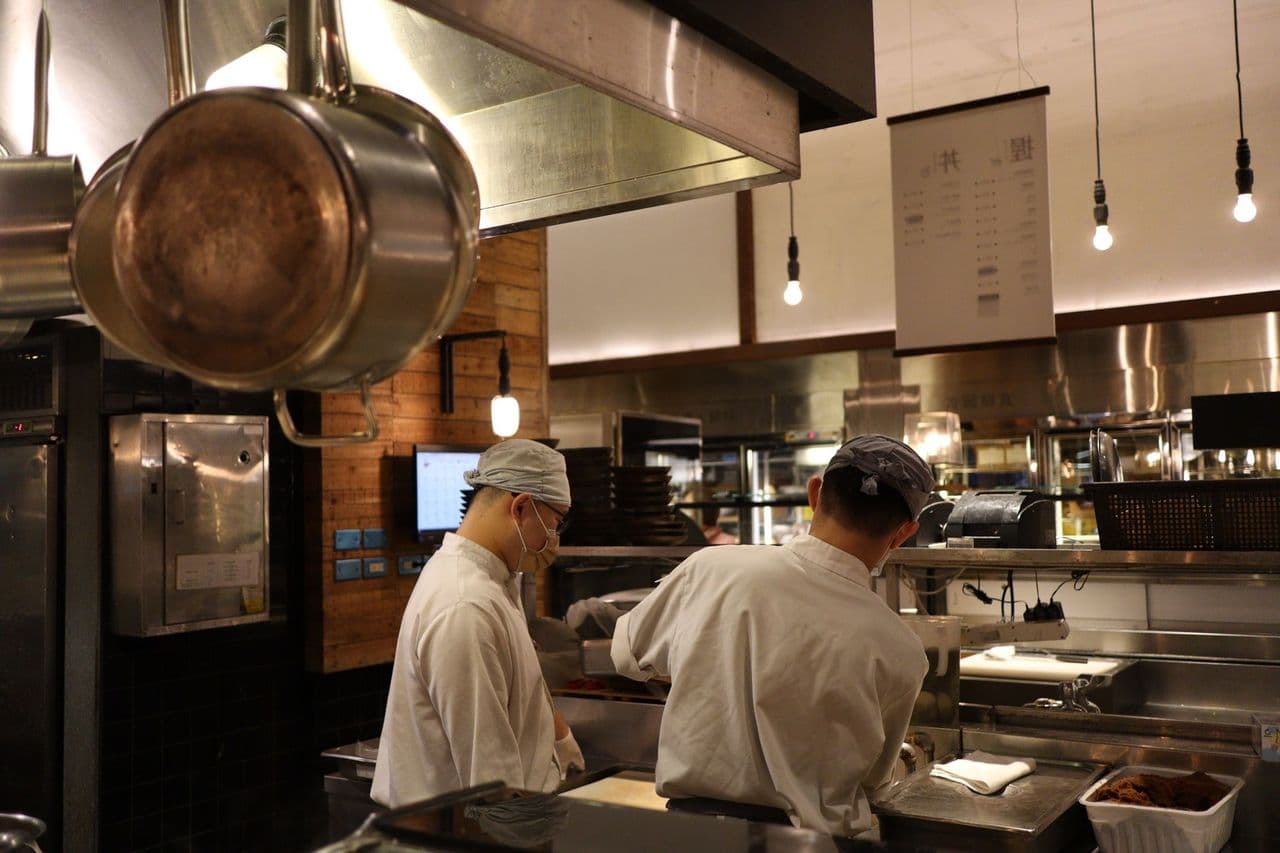
Restaurants sell a decision that gets made in minutes, sometimes seconds: what to eat tonight, and where. That compressed decision window is what makes restaurant marketing simultaneously easy to explain to a client and hard to execute well. The client understands intuitively that reviews and local visibility matter; what most generalist agencies underdeliver on is the operational discipline to keep a Google Business Profile, a review response cadence, and a local SEO presence all working together well enough to actually win that few-seconds decision against every other restaurant on the same block.
Conduit runs restaurant campaigns for agencies as a white label partner. Your agency owns the restaurant client relationship and the retail pricing; Conduit runs the local search, reputation management, and paid social that turn a hungry searcher's few seconds of decision-making into a reservation or a table filled.
01
Why restaurants are a white label decision, not a hire
A restaurant's marketing needs are deceptively broad for how small the check size on any single engagement usually is: local SEO, review management, Google Business Profile optimization, paid social for visual-first platforms, and increasingly a strategy for third-party delivery platforms that most restaurants did not choose so much as get pulled into. Building all of that in-house for one restaurant client rarely pencils out, but a white label partner running the same playbook across many restaurant accounts turns that same breadth into a repeatable, efficient process rather than a headcount problem for every new signing.
02
The channel that decides most restaurant visits before the meal: local search and reviews
Per BrightLocal's Local Consumer Review Survey 2026, 97% of consumers read reviews before choosing a local business, and 41% say they now "always" read reviews when browsing, up sharply from 29% a year earlier. The effect on behavior is not subtle: 85% are more likely to use a business after reading positive reviews, while 77% are put off entirely by negative ones. The same survey found consumers now consult an average of six different sources before deciding, and while Google's own share of local-business discovery slipped from 83% to 71% as AI answer engines gained ground, Google remains the dominant single source by a wide margin.
That AI shift is worth a restaurant client's attention on its own. BrightLocal's 2026 data shows the share of consumers using AI tools, ChatGPT, Google AI Mode, Gemini, and similar, to discover local businesses jumped from 6% in 2025 to 45% in 2026, making AI tools the third most common discovery channel behind only Google and Facebook and ahead of Yelp and Tripadvisor. Restaurants that show up cleanly in local SEO and structured data are the ones getting surfaced when a diner asks an AI assistant for a recommendation instead of scrolling a map.
03
Paid social has to sell the food, not just the brand
Restaurant paid social works differently than most other local verticals because the product itself, the food, the plating, the room, is genuinely visual in a way a plumbing repair or a legal consultation never will be. Per Cropink's restaurant social media statistics, 86% of consumers say they are more likely to trust a brand that shares user-generated content, and food-focused Reels on Instagram generate engagement rates well above static image posts, with dining and hospitality accounts averaging around 3.1% engagement against a lower cross-industry norm. That is a direct argument for why a restaurant's paid social strategy should lean on real customer photos and short-form video of the actual food and room rather than generic stock imagery or purely promotional graphics, since the format that performs best is the one that looks the least like a traditional ad.
Watch out
Restaurant paid social works differently than most other local verticals because the product itself, the food, the plating, the room, is genuinely visual in a way a plumbing repair or a legal consultation never will be.
04
The trust shift toward AI recommendations changes what "visibility" means
The jump BrightLocal documented, AI-tool usage for local discovery rising from 6% to 45% of consumers in a single year, is not a distant trend for a restaurant client to worry about later, it is already reshaping which restaurants get recommended when a diner simply asks an AI assistant what to eat nearby. A restaurant with thin, inconsistent, or outdated structured data across its website and Google Business Profile is a weak candidate for an AI-generated recommendation in a way it might not have been a weak candidate for a traditional search result, since the AI model is synthesizing an answer from whatever legible, trustworthy information it can find rather than simply ranking a list of links for a human to click through themselves.
05
Online ordering is now a marketing channel, not just an operations tool
Per Toast's 2026 restaurant industry statistics, 78% of customers using online ordering say it saved them meaningful time, and restaurants using a full marketing suite tied to their ordering platform saw 63% more sales than those running ordering and marketing as separate, disconnected systems. That gap is the clearest evidence that a restaurant's online-ordering experience is not purely a back-of-house operations decision anymore, it is part of the same funnel local SEO and paid social are feeding, and a marketing plan that stops at driving a click to the website without connecting to what happens on the ordering platform itself is leaving real, measurable sales on the table.
06
Restaurants are also a technology-adoption story now
The restaurant industry itself is leaning hard into digital operations, which shapes what a marketing partner needs to plug into. Per the National Restaurant Association's 2026 State of the Restaurant Industry report, more than 88% of U.S. restaurants are now actively using AI-powered systems for inventory forecasting, scheduling, customer analytics, or digital ordering optimization, and over 80% use some combination of online ordering, reservation, or analytics technology. Yet only about 1 in 10 operators consider their restaurant at the forefront of that technology adoption, while roughly 60% describe themselves as merely "in the mainstream." That gap between adopting the tools and using them well is exactly where a marketing partner earns its keep: connecting the ordering and reservation data the restaurant already collects to the campaigns actually driving it.
- 01
Local SEO and a fully optimized Google Business Profile, since Google remains the single largest local-discovery channel even as AI tools gain share.
- 02
Structured review management and response cadence, because 97% of consumers read reviews first and 77% are actively deterred by unanswered negative ones.
- 03
Paid social tuned for visual, appetite-driven platforms, where a restaurant's actual product (the food, the room, the experience) can do the selling that text-based search cannot.
07
The industry is bigger, and thinner-margin, than most clients realize
The restaurant category your agency's clients compete in is genuinely large: the National Restaurant Association's 2026 State of the Restaurant Industry report projects total restaurant and foodservice sales to reach $1.55 trillion in 2026, a 4.8% increase over 2025, though real growth after inflation is closer to 1.3%. The same report notes that more than half of average restaurant traffic now comes from off-premises channels, delivery, takeout, and curbside combined, a structural shift that changes what a restaurant's marketing needs to prioritize. It also carries a warning most restaurant owners already feel in their margins: 42% of operators reported their restaurant was not profitable in 2025, which means the marketing spend your agency is managing is coming out of a genuinely tight budget, not a discretionary one, and needs to be defensible against real numbers, not vibes.
08
The delivery-platform reality most restaurants didn't choose
Third-party delivery now shapes a meaningful share of restaurant revenue whether or not the operator wanted to build a strategy around it. Market data compiled by Business of Apps puts the U.S. food delivery market at roughly $105.8 billion in 2026, and the same data set shows a genuinely concentrated market: DoorDash holds the largest single share, with Uber Eats and Grubhub splitting most of the remainder rather than a wide field of competitors. A restaurant client's marketing strategy has to account for the fact that a meaningful share of their discovery and ordering now happens on a platform the restaurant does not control the branding or the customer relationship on, which makes the restaurant's own direct-channel presence, its website, its Google Business Profile, its first-party ordering, even more important as the one place the restaurant fully owns.
That concentration matters strategically for how your agency advises a restaurant client on where to spend limited marketing dollars. With more than half of average restaurant traffic now coming from off-premises channels per the National Restaurant Association, a restaurant cannot simply opt out of delivery platforms, but it can and should build its own direct-ordering and reservation presence aggressively enough that it is not fully dependent on a platform relationship it does not control the economics of.
Serve restaurants clients without building the team
Twenty minutes with the pod that runs it. Bring one client and we will tell you if it is a fit.
09
What separates a fine-dining client from a fast-casual one
Two restaurant clients can sit in the same broad vertical and need almost opposite marketing plans. A fine-dining destination competes on reservations and special-occasion intent, where a strong Google Business Profile, polished visual content, and a smooth OpenTable or Resy integration matter more than proximity-based paid search, since guests are often willing to travel for the right experience. A fast-casual or quick-service concept competes on proximity and speed instead: "near me" and lunch-rush searches, a frictionless online-ordering flow, and local SEO tuned for immediacy rather than occasion. Applying the fine-dining playbook to a fast-casual client, or vice versa, is a common and avoidable mismatch that shows up in underperformance an agency often blames on the channel rather than on the strategy fit.
10
How Conduit runs restaurants on GPS
Every engagement starts with GTM, GA4, and Conversion Clarity configured and verified before a single campaign launches, with tracking tied to reservation clicks, direction requests, and calls sourced from the Google Business Profile listing specifically, not just aggregate site traffic. That is what lets a restaurant owner see whether last month's local SEO push or paid social flight actually produced tables filled, rather than a report full of impressions with no connection to covers served.
From there the channel mix is built around what actually drives foot traffic for that specific restaurant's positioning, a fine-dining destination competing on reservations reads very differently from a fast-casual spot competing on lunch-rush proximity searches. Conduit's proof point in this vertical is straightforward: restaurant clients running this model have seen measurable increases in real foot traffic, the metric that actually matters to an owner watching covers per night, not just clicks or impressions on a dashboard.
11
The review-response cadence, specifically
Given how much weight BrightLocal's data puts on reviews, the operational question worth answering concretely is what an actual review-response cadence looks like rather than the vague instruction to "manage reviews." It means responding to every negative review within a short, defined window, not weeks later after the damage to that specific decision-in-progress is already done, and it means responding to positive reviews too, since a restaurant that only ever replies to complaints reads as defensive rather than genuinely engaged with its guests. It also means monitoring beyond Google itself, since BrightLocal's data shows consumers now consult an average of six different sources, which means a restaurant with a pristine Google profile and a neglected Yelp or Tripadvisor presence is still leaking trust somewhere a prospective guest is actually looking.
- 01
Respond to every review, positive and negative, within a defined window rather than only reacting to complaints.
- 02
Monitor beyond Google specifically, since guests consult an average of six sources before deciding where to eat.
- 03
Track review sentiment and response time as a reported metric, not an invisible background task the client only hears about when something goes wrong.
12
The pod model behind the restaurant playbook
The reason a review cadence never goes dormant under Conduit's model is structural, not a matter of individual diligence: restaurant fulfillment runs through a dedicated, US-based specialist pod rather than a single account manager juggling review responses alongside everything else on their plate. Conduit has been agency-exclusive since 2017, running this same pod model across its hundreds of partner agencies, which is what keeps review response times and local SEO monitoring consistent even as a pod's overall restaurant client roster grows. An agency evaluating whether to build this capability in-house instead can compare the actual mechanics, and the wholesale-to-retail pricing, in Conduit's playbooks and on its pricing page.
13
Common mistakes agencies make with restaurant clients
The most common mistake is treating Google Business Profile as a set-it-and-forget-it listing rather than an actively managed asset, missing the review-response cadence that BrightLocal's data shows directly affects whether 85% of consumers become more likely to visit or 77% become less likely to. The second is running paid social with generic restaurant creative instead of the specific dishes, room, and experience that make that restaurant different from the one three doors down. The third is ignoring the delivery-platform share of the business entirely in the marketing plan, leaving the restaurant's website and direct-ordering presence undifferentiated from a listing the restaurant does not fully control.
Fixing all three comes down to the same discipline Conduit runs everywhere: build attribution before spend moves so covers filled can actually be traced to a channel, keep the review and Google Business Profile layer actively managed rather than dormant, and build a direct-channel strategy that gives the restaurant a reason for diners to come straight to it instead of only discovering it through a third-party delivery app.
14
What the first 90 days look like
The first month is discovery and setup: auditing the existing Google Business Profile and review profile against local competitors, mapping the delivery-platform share of the business, and configuring GTM, GA4, and Conversion Clarity with tracking on reservation clicks and direction requests. The second month is when local SEO improvements and an active review-response cadence start compounding alongside the first paid social flights built around the restaurant's actual food and room. By the third month the reporting should show a clean read on which channel is driving reservations and walk-ins, giving your agency real numbers to bring to the owner instead of a vague update about brand visibility.
15
How to talk to a restaurant owner about results
A restaurant owner rarely thinks in impressions, they think in covers, average check, and whether tonight's dining room looks full. A marketing report that translates channel performance into that language, this local SEO push produced this many direction requests, this paid social flight produced this many reservation clicks during a specific slow weeknight the owner flagged as a priority, does more to earn a renewal than a generic monthly summary of engagement metrics ever will. Building that translation layer into the reporting from day one, rather than defaulting to whatever a platform's dashboard shows by default, is a small operational choice with an outsized effect on how a restaurant client actually experiences the value of the engagement.
16
Why this matters beyond restaurants
The pattern restaurants demand, an actively managed local presence, a review cadence that never goes dormant, and attribution that connects marketing spend to the specific action (a reservation, a walk-in, a call) that pays the bills, is the same operational discipline that separates a fulfillment partner worth trusting with a client's local visibility from one that treats every local business the same. Restaurants are a useful proving ground precisely because the feedback loop is so fast: an owner knows within a week whether tables are fuller, which makes this one of the clearest vericals for showing an agency what a properly run white label partnership actually looks like in practice, and one worth reviewing against Conduit's published pricing before deciding whether to bring it in-house.
Where to start
The channels restaurants clients buy most
Restaurants, answered
Questions agencies ask about this vertical
How much do reviews actually matter for a restaurant's local visibility?
Enormously. Per BrightLocal's 2026 survey, 97% of consumers read reviews before choosing a local business, 85% are more likely to use a business after positive reviews, and 77% are put off by negative ones. A dormant, unmanaged review profile is a direct hit to covers.
Are AI tools actually changing how people find restaurants?
Yes, quickly. BrightLocal's data shows AI-tool usage for local business discovery jumped from 6% in 2025 to 45% in 2026, making it the third most common discovery channel behind Google and Facebook. Restaurants with clean local SEO and structured data are the ones surfacing in those AI-generated recommendations.
Should a restaurant client worry about delivery platforms taking over their marketing?
It is worth planning around rather than ignoring. The U.S. food delivery market is roughly $105.8 billion in 2026, and a meaningful share of a restaurant's discovery happens there. That makes the restaurant's own direct channels, website, Google Business Profile, first-party ordering, more important, not less, since it is the one place the restaurant fully controls the relationship.
Who owns the restaurant relationship in a white label engagement?
Your agency. Conduit is agency-exclusive and never contacts the restaurant directly. Every report and campaign ships under your brand.
What results has Conduit produced for restaurant clients?
Measurable increases in real foot traffic, the metric restaurant owners actually track, driven by an actively managed local search and reputation presence tied to reservation and walk-in tracking rather than impressions alone.
How is restaurant marketing different from other local verticals?
The decision window is much shorter, often minutes, and reviews carry outsized weight in that short window. It also carries a channel most other local verticals do not have to think about at all: third-party delivery platforms that shape discovery whether the restaurant wants them to or not.


