TikTok Ads for Agencies: Creative Velocity Is the Strategy
TikTok ads for agencies: the accounts that scale are the ones testing the most variants fastest, not the ones with the single best video. Smart+ and UGC pipelines are the infrastructure, not the strategy.
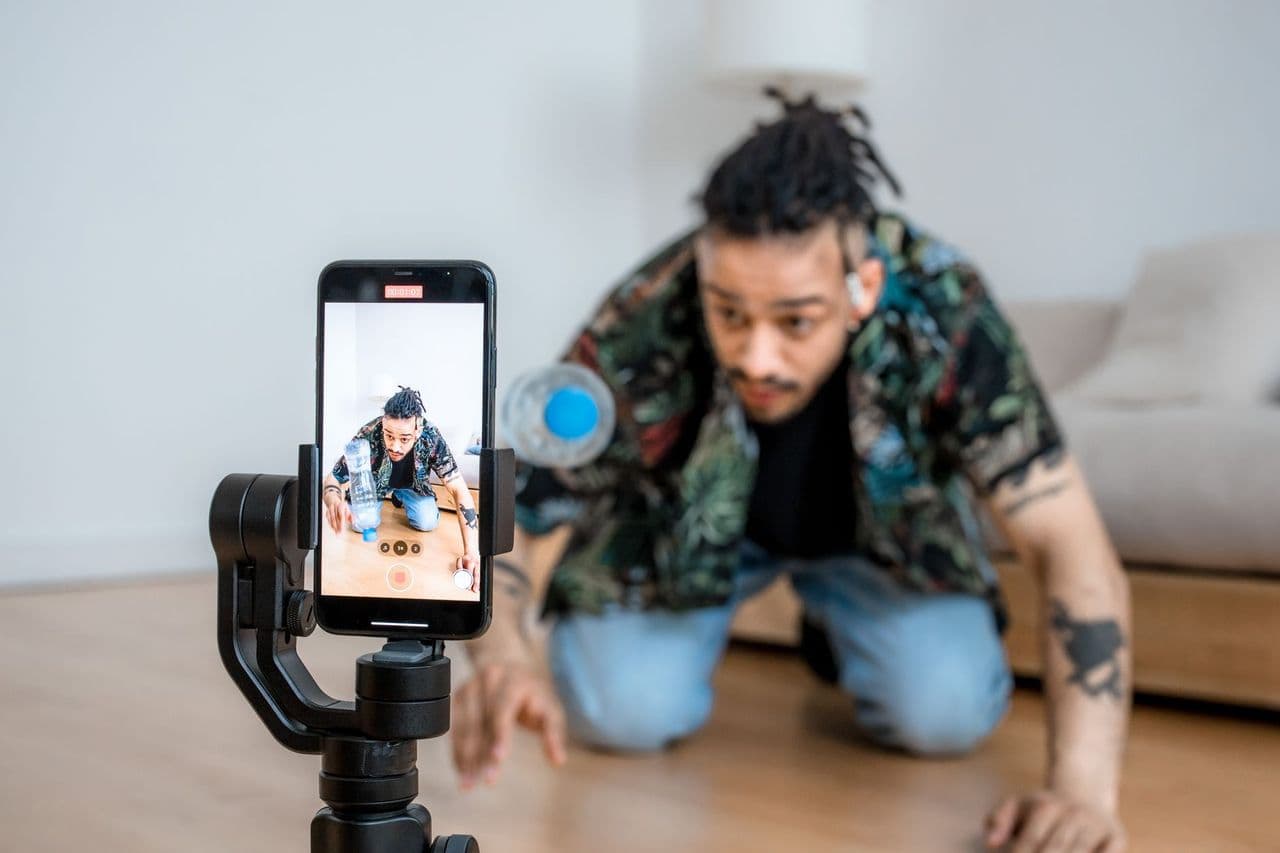
TikTok ad accounts that win are not the ones with the single best video. They're the ones producing and testing the most variants, fastest, and letting the platform's own optimization find the winner instead of trying to predict it in a creative review meeting. Polish still matters at the individual asset level, but volume and iteration speed are what actually separate the accounts that scale from the ones that plateau after the first strong creative burns out.
Why native format rewards volume over production value
TikTok's own creative guidance is direct about what performs: ads built TikTok-first, meaning shot and edited to look like the organic content around them rather than a repurposed TV spot, catch attention for 74% of viewers and drive 3.3x more clicks, likes, and shares than the same message adapted from another platform. Ninety percent of ad recall happens in the first six seconds, and 88% of users say sound is central to the experience, which means the format itself rewards fast, native-feeling production over a single expensive hero asset that took a month to finish. A high volume of quick, on-format variants beats a small number of highly produced ones on this platform specifically, because the audience's tolerance for anything that reads as a traditional ad is low and drops further with every rewatch.
Smart+ automates delivery, not the creative decision
Smart+ is TikTok's automated campaign structure, a single AI-managed setup that handles targeting, placement, and budget allocation across an objective instead of requiring a manually built campaign for each audience segment. It is genuinely useful for reducing manual setup overhead on performance campaigns, and TikTok positions it as the default performance advertising flow going forward. What it does not do is generate the creative decision-making an account still needs. Smart+ optimizes delivery against whatever creative variants it has to work with. An account that feeds it three tired assets gets an optimized version of a weak input. The volume and freshness of the creative pool feeding the automation is still the actual lever, not the automation itself.
What the automation layer is actually good at
Where TikTok's automation genuinely earns its place is in reducing the cost of producing that volume, not in replacing the judgment behind it. Symphony's Recommended Creatives tool generates new video assets, scripts, voiceovers, and virtual avatars included, straight from a campaign's destination URL, and an auto-add setting can refresh a campaign's creative pool mid-delivery specifically to counter fatigue. TikTok's own case data shows the athleisure brand Halara cutting cost-per-acquisition 70% using this feature against a baseline campaign without it. A companion tool, Automatic Enhancements, upgrades existing footage, resolution, formatting, and translation into more than fifty languages, and reported a 50% lower cost-per-acquisition for one advertiser localizing English content into Spanish. Both tools exist to solve the same bottleneck: producing enough creative volume fast enough to keep an account's testing pipeline fed.
How much volume is actually enough
There's no fixed number that works across every account, but the operating discipline is consistent: enough new variants entering test each week that the account is never running on a single creative past the point where its performance curve has started to flatten. That means treating creative production as a recurring weekly or biweekly cadence built into the account's operating rhythm, the same way budget pacing gets checked weekly, rather than a production sprint that happens once at launch and again only when someone notices performance has dropped.
- Set a minimum number of new variants entering test on a fixed cadence, not only when a creative visibly fatigues
- Kill underperforming variants quickly rather than letting them run out the flight on inertia
- Scale a winning variant's budget before spending more time trying to replicate why it worked
- Keep the UGC and Symphony pipelines feeding new raw material continuously, not as a one-time asset pull
Where iteration actually pays off fastest
The first two to three seconds of a TikTok ad carry more of the performance variance than any other single element, which is exactly what TikTok's own data on ad recall reflects: most of a viewer's decision to keep watching or scroll past happens almost immediately. That makes the hook the highest-leverage thing to iterate on, testing several different opening seconds against the same underlying offer or message, rather than spending equal testing effort across every part of the video. An account with limited production time gets more out of testing five different hooks on one core message than one hook each across five completely different concepts.
Running this cadence across a full client roster is a staffing question as much as a creative one. A single creative lead trying to hand-produce enough native variants for a dozen accounts will bottleneck regardless of how good the process is, which is exactly why the UGC and automation tools matter operationally, not just creatively: they are what makes creative velocity achievable without adding headcount at the same rate the account roster grows.
Briefing a UGC creator so the raw footage is actually usable
A vague brief is the single biggest cause of unusable UGC footage. A creator asked to "just talk about the product naturally" has no actual direction, and often produces something too polished, too scripted, or too far off the brand's message to cut into a working ad. A working brief gives a creator the hook direction, not a script, a couple of example videos showing the tone that's landing, the specific claim or offer that has to appear somewhere in the video, and an explicit list of what to avoid, competitor mentions, specific medical or financial claims, anything that would need legal review. The creator still owns the delivery and the native feel. The brief just narrows the range of what comes back so more of it is usable.
Requesting raw, unedited footage as a deliverable alongside the creator's own cut is worth building into every brief, since it turns one piece of creator content into several: the finished cut for organic-style posting, and the raw clips for the internal team to recut into shorter hooks, alternate CTAs, or spliced-together variants for testing. That single request roughly doubles what a production budget produces without adding another creator fee, and it's the difference between a UGC pipeline that produces one asset per creator and one that produces a genuine testing pool.
Where TikTok Creator Marketplace fits in the sourcing pipeline
TikTok Creator Marketplace is the platform's own matchmaking layer between brands and creators, built to source creators against a campaign brief, manage the collaboration, and pull performance reporting after the content runs, all inside one system rather than across DMs and spreadsheets. For an agency managing UGC sourcing across a full client roster, using the marketplace's own briefing and reporting tools is what keeps sourcing itself from becoming a bottleneck, the same operational problem that makes Content Suite and Symphony worth using for volume production. It is not a replacement for a genuine creative brief. It is the infrastructure that makes running that brief across dozens of creators at once actually manageable.
Splitting budget between the test pool and the scaled winner
An account testing constantly but never actually scaling anything is just spending money to generate data. The reverse mistake, scaling one early winner and cutting the test budget entirely, is what causes the plateau this whole approach is meant to avoid, because the winning creative eventually fatigues and there's nothing in the pipeline ready to replace it. A workable split keeps a defined majority of spend on the proven, scaled winner while holding a smaller, fixed test allocation running continuously alongside it, evaluated on its own cadence rather than raided for budget the moment the scaled creative needs more room.
The size of that test allocation should track account size, not follow a fixed rule across every client. A newer or smaller account needs a higher share of spend in test simply because it doesn't have a proven winner yet to scale, while a mature account with a reliable performer can run a smaller, steadier test slice since its job is refreshing the pipeline rather than finding the first winner from scratch. Reviewing that split on the same cadence as the creative refresh itself keeps the ratio from drifting into whichever mode is easiest to manage that week. Conduit's own Manta case study shows the same creative-testing discipline paying off on a different platform mix: an 11.8 million impression campaign that tested creative by audience segment down to a $0.10 cost per view.
UGC is the actual volume engine
Manually producing enough native-feeling variants to keep an account's testing pipeline full is not realistic at agency scale across multiple client accounts. TikTok's Content Suite is built around that exact problem: it surfaces organic creator content already being made about a brand, using AI to match relevant videos by caption, hashtag, voiceover, and on-screen text, then lets an advertiser license usable clips into paid creative with one-click rights authorization and sync them straight into TikTok Ads Manager's Creative Library. A UGC pipeline built around discovering and licensing existing creator content, rather than commissioning every variant from scratch, is what makes real creative volume achievable across a full client roster instead of just the one or two accounts that can absorb a bigger production budget.
None of this replaces a media strategy, ROAS targets still set what a winning variant actually needs to deliver, and Smart+ still needs a defined budget and objective to optimize against. But on TikTok specifically, the accounts that win are the ones treating creative volume and refresh cadence as the primary lever, with automation and UGC pipelines as the infrastructure that makes that volume achievable, not the strategy itself. Conduit's white label TikTok advertising program is built around that creative velocity model rather than a single hero-asset approach.
Services mentioned