Zero Direct Clients, Infinite Growth
Conduit has never taken a direct client. Every account is delivered under a partner agency's brand. Here is why that constraint, not despite it but because of it, is the growth model.

The video above explains the model directly. This post goes into why a fulfillment company choosing to never work with a client directly is a growth strategy rather than a limitation, and what it means for the agencies that resell that work.
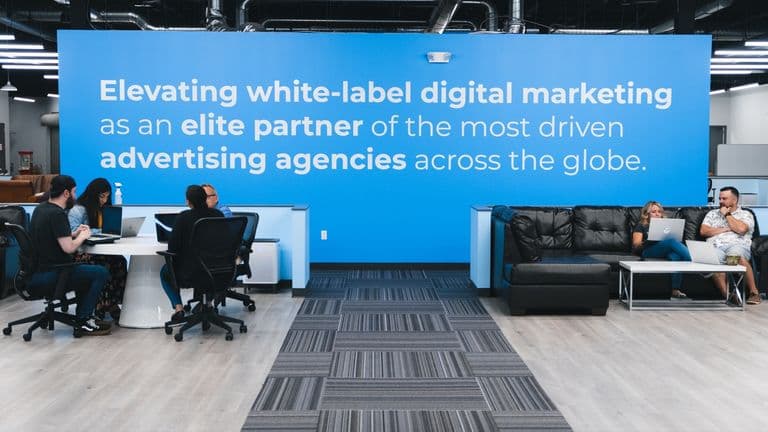
Conduit has operated as an agency-exclusive fulfillment partner since 2017 and has never taken on a direct client. Every account is delivered under the reselling agency's brand, with Conduit invisible to the end client. That is a real constraint, it caps the addressable market to agencies rather than the much larger universe of businesses that need marketing directly, and it is also the entire reason the model works for the agencies that use it.
Why the constraint is the value, not a limit on it
A fulfillment partner that also sells direct is a competitor wearing a partner's clothing. Every agency evaluating that kind of partner has to ask, at least privately, whether the partner will eventually pitch their own client directly once the relationship has matured. A white label reseller model with a hard no-direct-clients policy removes that question entirely. The agency is not renting capacity from a company that might compete with them later, they are working with a partner whose entire business model depends on the agency staying the front-facing brand.
- No direct clients means no incentive to build a relationship with your client behind your back
- The partner's growth depends entirely on agencies succeeding and staying, which aligns incentives cleanly
- A non-solicitation agreement backs the policy contractually, not just as a stated intention
- The agency owns the entire client relationship, reporting, communication, and renewal, from end to end
What this means for an agency deciding who to trust with fulfillment
This is one of the more concrete questions worth asking any prospective fulfillment partner: do you ever work with clients directly, and if that ever changes, what happens to my accounts. A vague answer is itself useful information. A referral versus reseller structure, where the fulfillment partner is contractually barred from ever becoming a direct competitor, is a structural protection that a verbal assurance can never really replace, because verbal assurances do not survive a change in leadership, strategy, or ownership the way a signed clause does.
What a capacity crunch reveals about a partner's real priorities
The clearest place a hybrid model shows its true priorities is not in a sales conversation, it is in a busy quarter. When a fulfillment provider works both direct clients and reselling agencies at once, and demand outpaces headcount, someone gets deprioritized, and it is rarely obvious to the agency which accounts absorbed the slack. A technical audit that used to turn around in a week starts taking three. An account manager who used to flag a ranking dip proactively now waits for the agency to ask first. None of this shows up as an announced policy change, it shows up as a slow drift in responsiveness that is easy to attribute to a busy season rather than to a structural choice about which relationships get protected first when capacity runs short.
An agency-exclusive partner cannot make that tradeoff, because there is no direct book of business competing for the same production hours. Every hour of capacity, in a slow month or a crowded one, is already earmarked for reselling agencies, which means a capacity crunch gets solved by hiring or reprioritizing across agency accounts on the merits, not by quietly protecting the relationships the partner's own brand happens to be riding on.
The contract language that actually protects an agency's client relationship
A verbal commitment to staying agency-exclusive is worth exactly as much as the person who made it, and people leave, get acquired, or change strategy under new ownership. The commitment that survives all three is the one written into the fulfillment agreement itself, specified with the same precision an agency would expect from a service level agreement, and a few particular clauses are worth reading closely rather than taking on faith.
- Whether the non-solicitation clause has a defined duration that survives after the agreement ends, not just while it is active
- Whether it covers indirect contact too, through an affiliated brand, a new entity, or a rebrand, not only contact under the partner's current name
- Who owns the client data, creative assets, and login access if the partnership ends, and how quickly it gets handed back
- Whether the partner can reference the underlying client by name in their own marketing or case studies without the agency's written consent
- What happens to existing accounts if the partner is acquired by a company that does not share the same exclusivity commitment
That last point is worth taking seriously even when the current ownership seems permanent. A fulfillment company built around a founder's personal commitment to staying agency-exclusive can lose that commitment the moment the founder sells, unless the exclusivity is written into the agreement itself rather than living only in how the company has operated so far. An agency that never asks to see this language in writing is trusting a policy that could change the day the ownership does.
What an agency gives up by choosing an exclusive-only partner
The exclusivity commitment is not free, and it is worth naming the real tradeoff rather than treating the model as an automatic win with no cost attached. A fulfillment provider that never sells direct is also a provider that cannot subsidize its agency pricing with higher-margin direct retainers, which means agency pricing has to stand on its own economics. It also means a smaller total portfolio of case studies to draw on than a competitor selling both channels, since the addressable market is capped at agencies rather than the much larger pool of businesses that buy marketing directly.
For most agencies, that tradeoff is worth making, because the alternative risk, a partner who quietly becomes a competitor once an account looks profitable enough to take direct, is a larger and far less visible cost than a modest pricing difference. But it deserves to be named plainly rather than assumed away. An agency comparing pricing across a few prospective partners should expect an exclusive-only model to run somewhat higher than a hybrid provider's headline rate, and should treat that gap as the price of not having to keep wondering about the question at all.
How exclusivity changes what growth looks like from the inside
An agency-exclusive fulfillment company cannot grow by winning bigger individual accounts, because it does not have accounts of its own to grow, only agencies whose books it fulfills. The entire growth model depends on partner agencies landing new clients and expanding existing ones, which means the fulfillment side has a direct financial incentive to make each partner agency's book of business bigger, not to extract the most margin out of any single account before it eventually churns.
This shows up in small, practical ways once an agency has been in the relationship for a while: a fulfillment partner incentivized this way tends to flag expansion opportunities inside an agency's own client base proactively, because a bigger book for the agency is also a bigger book for the partner. It is the same logic behind running growth through a Goal, KPA, Solution framework rather than a fixed deliverable list: the fulfillment side only wins over time if the agency's own goals keep getting hit, which is a very different incentive than a provider whose growth comes from account volume regardless of whether any individual agency relationship is thriving.
What happens if a partner adds a direct sales team later
It is worth war-gaming a specific hypothetical before signing with any fulfillment partner: what happens the day someone on their leadership team proposes adding an in-house sales function to sell services directly, because market pressure to grow revenue faster eventually tempts almost every fulfillment business at some point in its life. A partner whose exclusivity is a current policy, rather than a structural feature of how the company is built, can reverse that policy with a single leadership decision, and the agencies relying on it have no real say in whether that decision gets made.
The more durable version of exclusivity is structural: no direct sales function exists at all, no commission plan rewards a team member for closing revenue outside the agency channel, and the company's entire operating model, from how inbound leads get routed to how case studies get attributed, assumes the client is never spoken to directly. That kind of exclusivity is much harder to reverse quietly, because reversing it means rebuilding an entire function from scratch rather than simply changing a policy memo. Asking a prospective partner whether their exclusivity is a policy or a structural fact about how the business is built is a fair, direct question, and the specificity of the answer usually says more than the answer itself.
Why this discipline is cheaper to build in than to bolt on later
The easiest time to commit to never taking a direct client is before the company has ever taken one, which is when Conduit made that decision. A fulfillment business that starts hybrid and later tries to become agency-exclusive has to walk away from existing direct revenue to do it, a much harder decision than simply never building that revenue stream in the first place. That asymmetry is part of why genuinely agency-exclusive partners tend to be older, structural decisions rather than recent pivots, and it is a reasonable thing to ask about directly: was this always the model, or is it a policy adopted after a conflict of interest already caused a problem.
For an agency comparing fulfillment partners, that history is more informative than almost anything in a pitch deck. A partner that has never taken a direct client, going back to when the company started, has never had to unwind the incentive to take one. A partner that recently announced a new agency-only policy is asking to be trusted on a promise that, by definition, has not yet been tested by the kind of profitable direct opportunity that would reveal whether the commitment actually holds.