
White Label PPC for Pet Insurance
Last updated September 2026
White label PPC for pet insurance runs paid search and social built around a comparison-shopping buyer and a category still fighting basic awareness, not brand recognition. Conduit prices campaigns against the real Animals & Pets benchmark, builds landing pages around quote comparison, and keeps every claim inside state-level insurance advertising rules rather than a borrowed human-health-insurance framework.
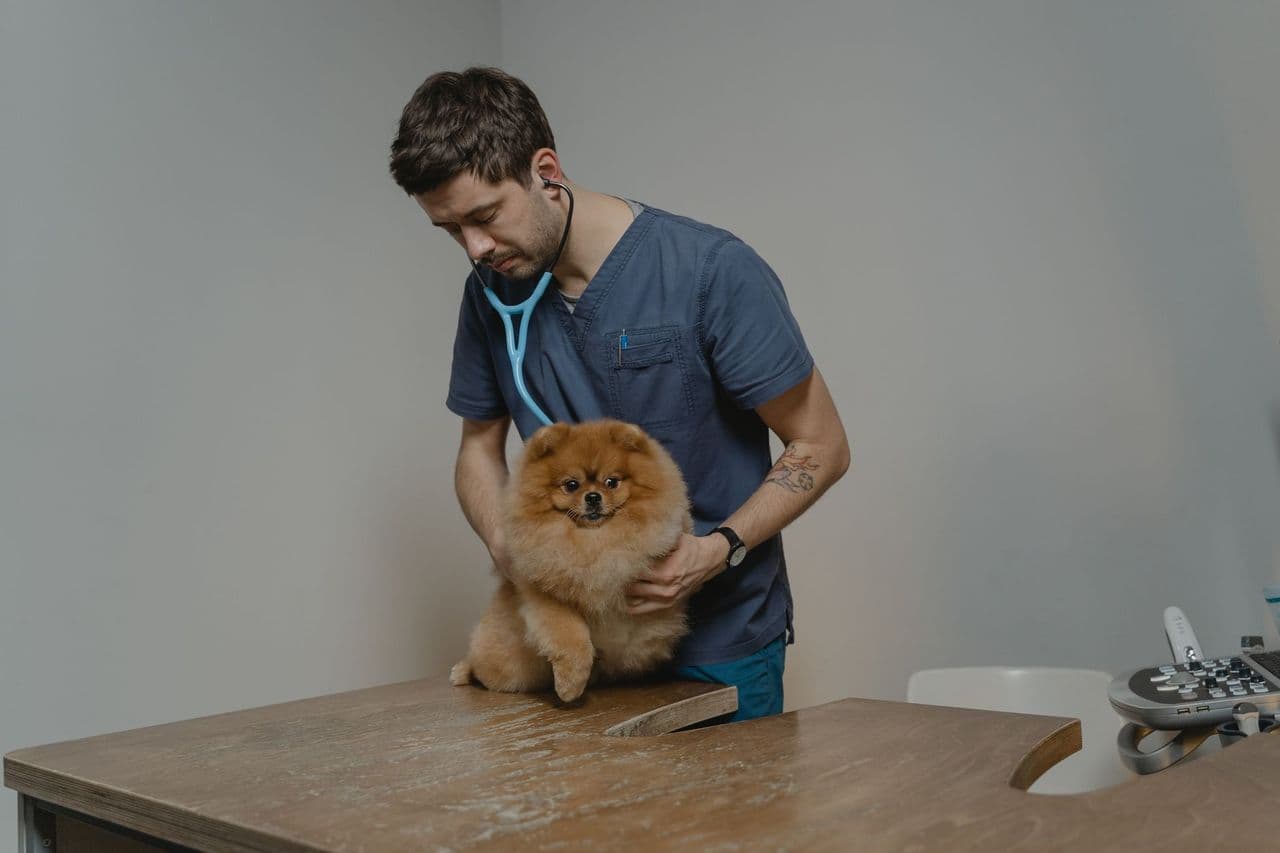
Pet insurance is a fast-growing category with a slow-moving awareness problem underneath it. Per NAPHIA's 2025 State of the Industry Report, North American pet insurance grew gross written premium 20.8% to $5.2 billion in 2025, yet only 4.27% of US pets carry a policy, and per Today's Veterinary Business's survey coverage, 44% of pet owners remain unaware the product exists at all. A category growing 20% a year with a total penetration still under 5% is not a demand problem, it is an education problem, and a PPC campaign built around comparison-stage keywords alone is fishing in the smaller pool of owners who already know what they are looking for.
Your agency does not need to build both a demand-generation strategy and an insurance-compliance review process from scratch to win pet insurance accounts. Conduit runs white label PPC for agencies serving pet insurance clients: your agency owns the client relationship and sets the retail price, and Conduit runs paid search and social built around both the comparison-shopping buyer who already knows what pet insurance is and the larger pool who still needs to be told.
That split is the central strategic decision in this vertical, and it is one a generalist PPC playbook built for a mature insurance category, auto or home, was never designed to make. Auto insurance advertising assumes the buyer already understands the product; pet insurance advertising, for a large share of its addressable audience, still has to do that explaining first, inside the same campaign that is also supposed to produce a quote request.
01
The awareness problem: most pet owners still do not know this exists
A 44% unaware figure is a genuinely unusual starting point for a paid search strategy, since most PPC playbooks assume the searcher already knows the category and is choosing between named competitors. In pet insurance, a meaningful share of the addressable audience is not searching for 'pet insurance' at all yet, they are searching for something adjacent, 'emergency vet bill help,' 'how to afford vet care,' a query that reveals the underlying need without naming the product that solves it.
Capturing that adjacent-intent audience requires content and ad copy built to introduce the category, not just compare it, which is a genuinely different creative brief than a comparison-stage ad assuming the reader already knows what a deductible or a reimbursement percentage means in this context. A campaign built only around 'pet insurance quotes' and named-competitor terms is deliberately leaving that larger, less-aware audience for a competitor's content marketing to educate first.
This is not an argument for abandoning comparison-stage search, which converts well and should stay well-funded. It is an argument for running both layers deliberately, one campaign built around the buyer who already knows what they want, one built around introducing the category to a buyer who has not yet connected their vet bill anxiety to a specific, purchasable product.
02
Why pet insurance PPC economics look nothing like human health insurance
Pet insurance sits in a genuinely different regulatory and platform category than human health insurance, which matters directly for how a campaign gets built. Google requires health insurance advertisers in the United States to hold a specific G2RS pre-certification before any healthcare-related ad can run, a real gate that shapes how those campaigns launch. Pet insurance does not fall under that certification requirement at all, since Google's health-insurance policy governs human medical coverage specifically, not property-and-casualty-adjacent products like pet policies.
That is a genuinely useful fact for an agency to know before pricing this account, since it means pet insurance campaigns avoid an entire compliance gate that adds real setup time to human health insurance and Medicare-adjacent accounts. The absence of that specific certification requirement does not mean the category is unregulated, though; it means the applicable rules sit at the state insurance-department level instead of the platform's healthcare-advertiser gate.
Per WordStream's 2026 Google Ads Benchmarks, the Animals & Pets category runs a $4.06 [CPC](/glossary/cpc), a strong 7.49% click-through rate, and a notably high 16.22% conversion rate, landing at a $31.50 cost per lead, well below the $66.69 all-industry average. That is a genuinely favorable cost structure relative to Finance & Insurance broadly, which runs a much higher $74.44 CPL, evidence that pet-adjacent search intent converts efficiently once a genuinely interested owner clicks through.
03
What the benchmarks actually say
The gap between the Animals & Pets category's $31.50 CPL and the broader Finance & Insurance category's $74.44 CPL is worth explaining plainly to a client, since both numbers are technically relevant to a pet insurance account and they tell different stories. Animals & Pets reflects genuine pet-owner search intent, which converts efficiently; Finance & Insurance reflects the wider, more skeptical insurance-shopping mindset broadly, which converts at a much lower rate industry-wide. A pet insurance campaign benefits from leaning into the pet-owner framing in its keyword and creative strategy rather than positioning itself primarily as a generic insurance product.
Comparison behavior in insurance generally supports building a quote-comparison experience directly into the funnel rather than routing every click straight to a single quote form. Per ValuePenguin's research on insurance shopping, 76% of consumers who shopped around saved money at least once, and 82% say comparing multiple quotes takes two hours or less, which means a landing page built around one plan with no comparison context is working against a buyer who already expects, and is prepared, to compare.
None of this means the category is easy money at a $31.50 CPL. The 16.22% conversion rate reflects a lead form fill or quote request, not a bound policy, and pet insurance underwriting frequently disqualifies pets with pre-existing conditions or above a certain age, which means a meaningful share of leads never convert to a paying policyholder regardless of how well the campaign performed. Reporting on lead volume alone overstates the real return, and campaigns should track quote-to-bind rate wherever the client's own underwriting and policy-issuance data supports it, even if that means building a manual monthly reconciliation rather than a fully automated feed.
Broader insurance-shopping behavior data adds useful context for how this specific audience approaches a purchase decision. Per J.D. Power's 2026 US Insurance Shopping Study, digital channels increasingly dominate how insurance buyers research and compare options across every line of coverage, a pattern pet insurance fits squarely inside given how young and digitally native its typical early-adopter buyer skews relative to other insurance categories. A campaign strategy built around a digital-first, comparison-heavy buyer is playing to this category's actual strength rather than fighting against it.
04
Comparison-shopping behavior and what it means for landing pages
A pet insurance landing page built around a single plan and a bare quote form is underperforming against a buyer who, per the ValuePenguin data above, is actively expecting to compare options and is willing to spend real time doing it. A page that surfaces coverage tiers, reimbursement percentages, and a clear explanation of how deductibles and pre-existing condition exclusions actually work converts a comparison-minded shopper better than a page that assumes the buyer already understands the product and just needs a price.
Breed and species-specific landing pages are worth the production investment in this category specifically, since a dog owner's underwriting questions, hip dysplasia, breed-specific conditions, are genuinely different from a cat owner's, and generic pet-agnostic copy misses the specific anxiety driving each search. A campaign segmented by species, even lightly, at the landing page level converts better than one page trying to speak to both audiences equally.
Age is the third variable landing pages need to account for directly, since a puppy or kitten owner is shopping preventively while an owner of an older pet is often shopping reactively, after a vet has already flagged a concerning symptom. The urgency and messaging that lands for a preventive shopper falls flat for a reactive one, and the reverse is just as true.
Veterinary partnership channels deserve a mention here even though they sit outside paid search directly, since a meaningful share of pet insurance awareness in this category still comes through a veterinarian's own recommendation at the point of care, not a search engine. A campaign strategy that ignores this entirely and treats paid search as the only acquisition channel worth building around is missing a real, complementary distribution path this category leans on more than most insurance lines do, and coordinating paid messaging with a client's existing veterinary partnerships, rather than running them as two unconnected efforts, improves both.
Retargeting deserves its own careful scope in this category, too, since Google's own restrictions on health-condition targeting, written for human health advertising, are worth checking against even where pet insurance sits outside the strict letter of that policy, simply because a remarketing audience built around a pet's specific medical search history could read as functionally similar to the kind of targeting the policy exists to prevent. Scoping remarketing around general site behavior rather than any pet-condition-specific signal keeps the campaign clean of that ambiguity entirely, and it is a more conservative standard than the category strictly requires today, which is exactly the kind of margin worth building in before a platform policy update closes the gap unexpectedly and forces a mid-campaign rebuild the client's own team never expected.
- Adjacent-intent content and campaigns built to introduce the category to the roughly 44% of owners who remain unaware pet insurance exists, alongside comparison-stage search for owners who already know what they want
- Landing pages built around coverage-tier comparison rather than a single plan and a bare quote form, matched to how insurance shoppers actually behave
- Species and life-stage segmentation in creative and landing pages, since a puppy owner and an older-cat owner are shopping for genuinely different reasons
- State-level insurance advertising compliance review on every claim and every price comparison, since pet insurance is regulated at the state department of insurance level, not Google's health-insurance certification gate
- Quote-to-bind tracking wherever the client's own underwriting data supports it, since lead volume alone overstates the real return in a category with real underwriting disqualification
See how this runs under your brand
Twenty minutes with the pod that runs it. Bring one client and we will tell you if it is a fit.
05
The insurance-advertising compliance layer
Pet insurance advertising is governed by state-level insurance regulation built on the same NAIC model framework that governs other insurance lines: advertisements must be truthful and not misleading, cannot misrepresent policy benefits, conditions, or terms, and cannot intentionally misquote premium rates. The NAIC's standard is stricter than a simple true-or-false test, too, a statement that is technically accurate but reasonably likely to mislead the intended audience still falls inside the prohibited category.
Price and savings claims deserve particular attention in ad copy given that standard: a claim like 'save up to 40%' needs to reflect real, current, substantiated data, not a best-case scenario presented as typical, and comparison claims against a named competitor's pricing carry real risk if the underlying comparison is not both accurate and current. Given ValuePenguin's 76% savings data above, comparison-framed messaging performs well with this audience, which makes it worth the extra review step to keep the specific numbers defensible.
Testimonials and reviews used in pet insurance ad creative should be handled with the same general care any regulated financial product requires, genuine, representative, and not selectively edited to overstate a typical experience, even though this category does not carry the same federal securities-law weight a financial-services or investment-adviser account does. The compliance bar here is real but proportionate, state insurance-advertising rules rather than SEC or FINRA oversight, and scoping the retainer against the correct, lighter framework avoids over-building process that this specific vertical does not require.
06
Where paid search is not enough on its own
A pet insurance brand entering the market for the first time, with no existing brand recognition and no search volume against its own name, is not well served by leading entirely with comparison-stage search, since that campaign type captures demand for buyers who already know the category and are comparing named brands the new entrant is not yet part of. In that specific scenario, a heavier initial investment in the adjacent-intent, category-education layer described above, paired with content and SEO work that builds organic visibility for those educational queries, often outperforms a Search-first budget that has little existing brand demand to capture.
The same limitation applies to any pet insurance brand competing purely on price in a market where the established players already dominate the comparison-stage auction; a new entrant bidding head-on for 'pet insurance quotes' against well-funded incumbents is paying a premium to compete for demand it has little differentiated claim to yet. A narrower wedge, breed-specific, price-tier-specific, or geography-specific, often produces a better return while brand recognition builds.
None of this is an argument against PPC for pet insurance broadly, since the Animals & Pets benchmark data above shows the category converts efficiently once a genuinely interested pet owner clicks through. It is a sequencing point specific to a newer or smaller brand: comparison-stage search rewards existing brand recognition this category's incumbents already have, and a new entrant's budget is often better spent building the awareness layer first rather than paying a premium to compete head-on for demand it is not yet positioned to win.
07
How it runs on GPS
Every engagement starts with GTM, GA4, and Conversion Clarity configured and verified before a single campaign launches, with conversion tracking built to capture both the quote-request event and, wherever the client's own systems support the integration, the eventual bind or policy-issuance event, since lead volume alone overstates real performance in a category with meaningful underwriting disqualification.
Reporting segments by species and by campaign type, adjacent-intent versus comparison-stage, so a client can see not just how many leads a given campaign produced, but which layer of the funnel it was actually working. That distinction matters directly to budget allocation decisions a client's marketing leadership makes every quarter, and a blended report that cannot separate the two layers cannot really inform that decision.
Conversion tracking is also built to respect the state-level compliance boundary described above, keeping price and savings claims traceable back to the specific, current data that justified them at the time the ad ran, so a compliance review months later can reconstruct exactly what substantiated a given claim rather than relying on institutional memory.
08
What the first 90 days looks like
Month one is discovery and segmentation: mapping the client's actual coverage tiers, underwriting restrictions, and state-level advertising requirements for every market the client operates in, and configuring GTM, GA4, and Conversion Clarity with species and campaign-type tracking built in from the start. Month two is when comparison-stage search launches first given its stronger, more predictable conversion rate, with adjacent-intent and category-education campaigns following once the comparison-stage foundation is producing clean data.
By month three, reporting should show which layer, comparison-stage or adjacent-intent, is producing the stronger quote-to-bind rate where that data is available, giving your agency a real conversation with the client about where the next quarter's budget should shift rather than a lead-volume number that cannot answer the question the client's underwriting team actually cares about.
Pet insurance PPC rewards an agency that takes the category's own awareness gap seriously rather than treating it like a mature insurance vertical with an already-educated buyer. That is exactly the kind of category-specific judgment a specialist pod carries into a new account faster than a generalist encountering a 44% awareness gap for the first time, worth weighing against the full white label vs in-house picture before deciding how to staff it.
Key terms


