
White Label OTT and CTV Advertising for Pet Insurance Agencies
Last updated September 2026
White label OTT and CTV advertising lets your agency build category awareness for pet insurance clients, a product most pet owners still are not searching for. Conduit builds pet-owner audience targeting, sequential creative, and geographic lift measurement under your brand, sized to whether the client is a regional MGA or a national carrier.
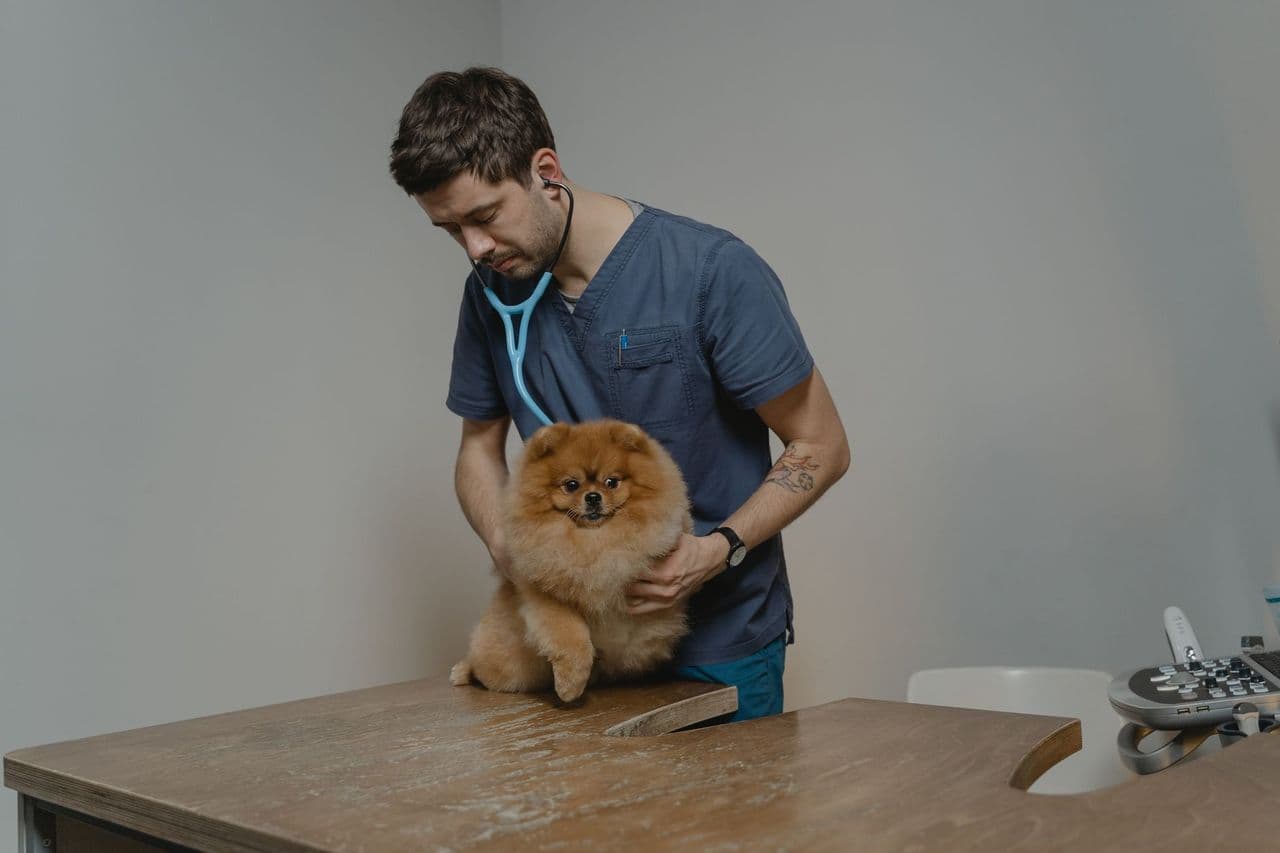
Pet insurance has a demand problem search cannot solve on its own: most of the addressable market has not searched for the product yet. Per NAPHIA's 2026 State of the Industry Report, only 4.27% of U.S. pets are currently insured, just 5.99% of dogs and 2.29% of cats, even after a 9% year-over-year increase in insured pets and a 20.8% jump in gross written premium to $5.2 billion, with total pets covered across North America now reaching 7.6 million. That gap between real, growing adoption and a market still overwhelmingly uninsured is exactly the kind of opportunity paid search cannot reach on its own, since search only captures people who already know to look for the product by name. That gap between awareness and adoption is precisely the problem CTV advertising exists to solve, and it is a problem an agency's existing paid search program, however well it is run, cannot fix by itself no matter how aggressively the budget grows.
Conduit runs OTT and CTV campaigns for pet insurance agencies and MGAs as a white label partner. Your agency owns the client relationship and the retail pricing; Conduit builds the pet-owner audience targeting, the creative sequencing, and the geographic lift measurement that proves a CTV flight actually moved quote volume, not just impressions, and delivers the reporting your agency can present as its own work. That reporting matters because a pet insurance client evaluating a new agency partnership is almost always comparing the pitch against a paid search program it already trusts, which means the case for adding CTV has to be made with the same rigor as the case for any existing channel, not sold on category enthusiasm alone.
01
Why pet insurance is an awareness problem before it's a search problem
The category's growth trajectory makes the awareness case even clearer. Grand View Research values the global pet insurance market at $25.7 billion in 2026, projected to reach $79.6 billion by 2033 at a 17.5% compound annual growth rate, growth that has to come from somewhere given how small the currently-insured share of pets actually is. A category growing that fast off a 4.27% penetration base is not maxing out its addressable audience through search alone; it is converting people who do not yet know pet insurance is a normal, sensible purchase, and that conversion job belongs to an awareness channel, not a bottom-funnel one already crowded with carriers bidding against each other on the same narrow set of keywords. The premium growth backs this up further: gross written premium climbing 20.8% while policy count grew only 9% points to rate increases and richer average policies doing real work too, evidence that the clients already in the category are spending more per pet, not just the category slowly adding new entrants, a dynamic that rewards a brand willing to invest in awareness now while adoption is still this far from saturated.
That is a genuinely different marketing problem than most local verticals face. A home services or restaurant client is largely competing for people already looking for the service; a pet insurance client is competing to create the search in the first place, among pet owners who have not yet connected a surprise vet bill to a product that could have covered it. That is precisely the kind of demand-creation problem CTV advertising is built to solve, and precisely the kind of problem a search-only media plan structurally cannot, no matter how well the keywords are chosen. Compare that dynamic against the broader case for programmatic and social advertising working together rather than as substitutes, and pet insurance is one of the clearer real-world examples of why a full-funnel plan outperforms a single-channel one in a genuinely underpenetrated category.
02
What the audience data actually says
The reach is there and the format works. Streaming captured 47.5% of U.S. TV viewing in December 2025 per Nielsen's The Gauge, and IAB's 2026 report puts total U.S. CTV spend at roughly $29.3 billion, up 11% year over year, alongside a broader digital video market surpassing $80 billion for the first time. Advertisers themselves increasingly trust the format for real business outcomes, not just reach: per data cited in Porch Group Media's analysis of CTV advertising for pet-category retailers, 55% of advertisers believe CTV is as effective as linear TV at driving return on ad spend, and another 36% believe it is more effective.
The same research found advertisers saw 22% stronger conversion rates in paid search and 9% stronger conversion rates in paid social after launching a CTV campaign, evidence that CTV's job in a full-funnel pet insurance plan is to make the other channels work harder, not to replace them, a dynamic worth reading alongside Conduit's broader programmatic versus paid social comparison for a client weighing where a first incremental dollar should go. Pet-ownership data specifically, breed, life stage, household composition, is available to CTV buyers at a level of precision that lets a pet insurance client target new-pet-owner households and older-pet households with entirely different messaging, rather than one generic spot run against a broad demographic guess that ignores where a given household actually sits in its pet-ownership life cycle. NAPHIA's claims data adds another layer of targeting logic worth building into the creative itself: gastrointestinal issues, ear infections, and skin conditions rank among the most common dog claims, while urinary tract issues and dental disease rank high for cats, real, specific conditions a script can reference instead of a vague appeal to peace of mind that could describe any insurance product in any category.
03
What we build for a pet insurance CTV campaign
A pet insurance CTV campaign has to do two different jobs depending on the household it reaches: create urgency for a household that just adopted a puppy or kitten, where accident coverage matters immediately, and build considered trust for a household with an older pet, where chronic-condition coverage and the insurer's claims-payment reputation matter more than urgency. Running one generic 30-second spot against both audiences wastes the precision pet-ownership data actually makes possible, and treats a genuinely segmentable audience as a single monolithic one. The build starts with audience segmentation by pet ownership and life stage, then layers in creative sequencing so a household's second or third exposure carries a different message than its first, moving from category education toward a direct quote call-to-action over the course of a flight rather than repeating the same ask on every impression:
- 01
Pet-ownership audience segments built on breed, life stage, and household composition data, not a flat 'pet owner' demographic bucket applied uniformly
- 02
A creative sequence that opens with category education (why vet costs justify coverage) before a second-touch spot carries a direct quote call-to-action
- 03
Geographic scope matched to the client
hyper-targeted regional flights for an MGA licensed in a handful of states, broader national reach for a carrier-level brand
- 04
15 and 30-second formats built around the real anxiety this category sells against, a surprise emergency vet bill, rather than generic pet-lifestyle imagery with no direct tie to the offer
- 05
Frequency capping tuned to the category's long consideration window, since a pet insurance decision rarely closes on a single exposure the way an impulse purchase might
04
The compliance layer most agencies underestimate here
Pet insurance is regulated insurance product advertising, and every state's department of insurance has rules about what a creative claim can say. Pricing claims like 'plans starting at $X a month' need to match what is actually filed with the state regulator, coverage descriptions cannot imply protection for pre-existing conditions the policy explicitly excludes, and creative promoting a specific MGA's product has to stay consistent with the underlying carrier's actual policy language, since the MGA is marketing coverage it does not itself underwrite and cannot unilaterally reword.
This compliance layer is lighter than what a FINRA-regulated financial services client carries, but it is real, and it differs by whether the client is a national carrier with an in-house compliance team or a smaller regional agency reselling one carrier's product under a state license. Every script should be checked against the specific state filing before it airs, not against a generic industry template, since two carriers selling what looks like a similar product on the surface can have meaningfully different filed exclusions and waiting periods. It is also worth being direct about scale: a single local agent with a modest monthly budget is rarely the right CTV candidate, since national carriers with far larger budgets already dominate frequency in that same inventory, and organic content plus comparison-focused search is usually the better first dollar for that size of client. CTV earns its place for regional MGAs, multi-state agencies, and national-scale carriers with genuine awareness budgets behind them, not a single storefront agent competing for the same impressions as a national brand. A useful rule of thumb: if a client cannot name at least three states or a regional footprint the license actually covers, the CTV conversation should wait until the search and content foundation is doing its job first, since a single-state or single-city budget rarely buys enough frequency to matter against national competitors already dominating the same inventory. That said, a well-funded regional MGA operating across even three or four contiguous states can often out-target a national carrier on relevance, since the regional player's creative and offer can speak directly to a specific state's veterinary cost environment in a way a one-size-fits-all national spot cannot.
See how this runs under your brand
Twenty minutes with the pod that runs it. Bring one client and we will tell you if it is a fit.
05
How it runs on GPS
Pet insurance's sales cycle rarely closes in a single browsing session, so CTV cannot be measured the way a same-session paid search click gets measured. Every engagement starts with GTM and GA4 configured and verified before launch, with quote-start and quote-complete funnel events instrumented so a lift in that funnel can be tied back to a specific flight window, plus Conversion Clarity on any phone-quote line the client runs, since a meaningful share of insurance shoppers still prefer to finish a quote conversation by phone. That instrumentation matters even more given how much of the category's growth is still ahead of it: with streaming devices now in roughly 89.5% of U.S. households per StackAdapt's 2026 CTV data, a pet insurance client's addressable CTV audience is close to the full universe of pet-owning households, not a narrow slice reachable only through a handful of specific streaming apps.
The measurement layer that actually proves CTV's contribution is geographic: flighting CTV in test markets while holding a comparable set of markets back as a control, then comparing quote-start and quote-complete volume between the two. The white-labeled report shows that lift by market and by flight window, next to the GA4 funnel data, giving your agency a defensible answer to the question every pet insurance client eventually asks: did the TV-style spend actually move quote volume, or just impressions nobody can tie back to a real business outcome. Because CTV upfront spending is on track to exceed primetime linear upfront spending for the first time in 2026, per eMarketer's forecast, this test-market discipline is only going to matter more as national carriers shift bigger budgets into the channel and the inventory gets more competitive to buy into well.
Takeaway
Pet insurance's sales cycle rarely closes in a single browsing session, so CTV cannot be measured the way a same-session paid search click gets measured.
06
Common mistakes agencies make with pet insurance CTV
The most common mistake is pouring the entire paid media budget into high-CPC search terms while ignoring that a huge majority of pet owners are not yet searching for the product at all, per NAPHIA's own protection-gap data. That leaves the awareness half of the funnel entirely unbuilt, and search costs keep rising as competitors bid up the same narrow pool of already-searching consumers, a dynamic that will only get more expensive as more carriers realize the same thing and pile into the same keywords. The second mistake is running one national, generic creative script without segmenting by pet life stage, which wastes the exact targeting precision CTV offers over a channel like linear television.
The third, and the one with real regulatory teeth, is a pricing or coverage claim in a 30-second script that does not match what is actually filed with the state insurance regulator, often because the creative was approved by a marketing team without a compliance review pass. Fixing all three means building the awareness layer deliberately instead of defaulting to search-only, segmenting creative by life stage and household composition, and running every script through the same compliance check the client's own filed policy language has to survive before it ever airs. A fourth pattern worth watching for is treating the first flight's results as final, when a category this early in its own adoption curve rewards a genuine test-and-learn posture over several quarters rather than a single verdict rendered after one campaign.
07
What the first 90 days looks like
The first month is audience and compliance setup: building pet-ownership and life-stage segments, confirming state-level advertising compliance requirements for the client's specific license and product structure, and instrumenting GA4 quote funnels and Conversion Clarity before any flight launches. The second month is the first flighted campaign, typically structured as a test-market versus control-market comparison so the lift measurement has something real to compare against from day one, with creative already sequenced from education toward a direct quote call-to-action.
By the third month the reporting should show quote-volume lift by test market, alongside creative-sequence performance showing whether category-education spots or direct quote-CTA spots are doing more of the work, giving your agency a genuine answer about where the next flight's budget should go instead of a guess. That test-and-expand rhythm is what separates a pet insurance CTV program that keeps earning budget from one that gets pulled after one unmeasured flight nobody can properly evaluate. It is also the rhythm that lets an agency make the case for expanding into new states methodically, market by market, rather than committing a full national budget before the first test has actually proven the creative and targeting approach works.
Pet insurance is a category where the addressable market is still mostly untapped, and CTV is the channel built to reach the households who have not yet made the connection between a surprise vet bill and a product that could have covered it. For an agency weighing whether this specialist targeting and lift-measurement work belongs in-house, the full white label versus in-house comparison is the place to actually price that decision out, and Conduit's pricing page shows what a wholesale CTV engagement costs against building the same DSP and measurement capability from scratch. Given how early this category still is in its own adoption curve, the agencies that build real CTV competence in pet insurance now are likely to be the ones a client keeps for years, not just the ones who happened to win the pitch this quarter. Few competing agencies have actually run a disciplined, compliance-reviewed, test-market CTV program in this specific category yet, which is exactly the kind of early-mover advantage that tends to close before most agencies notice it was ever open, and the ones building that track record now will be the ones with real proof to show the next prospective pet insurance client rather than a theoretical pitch. That proof, a documented lift number from a real flight, tends to close a pitch far faster than a general argument about the category's growth potential ever could.


